Over 450+ 5-Star Reviews on


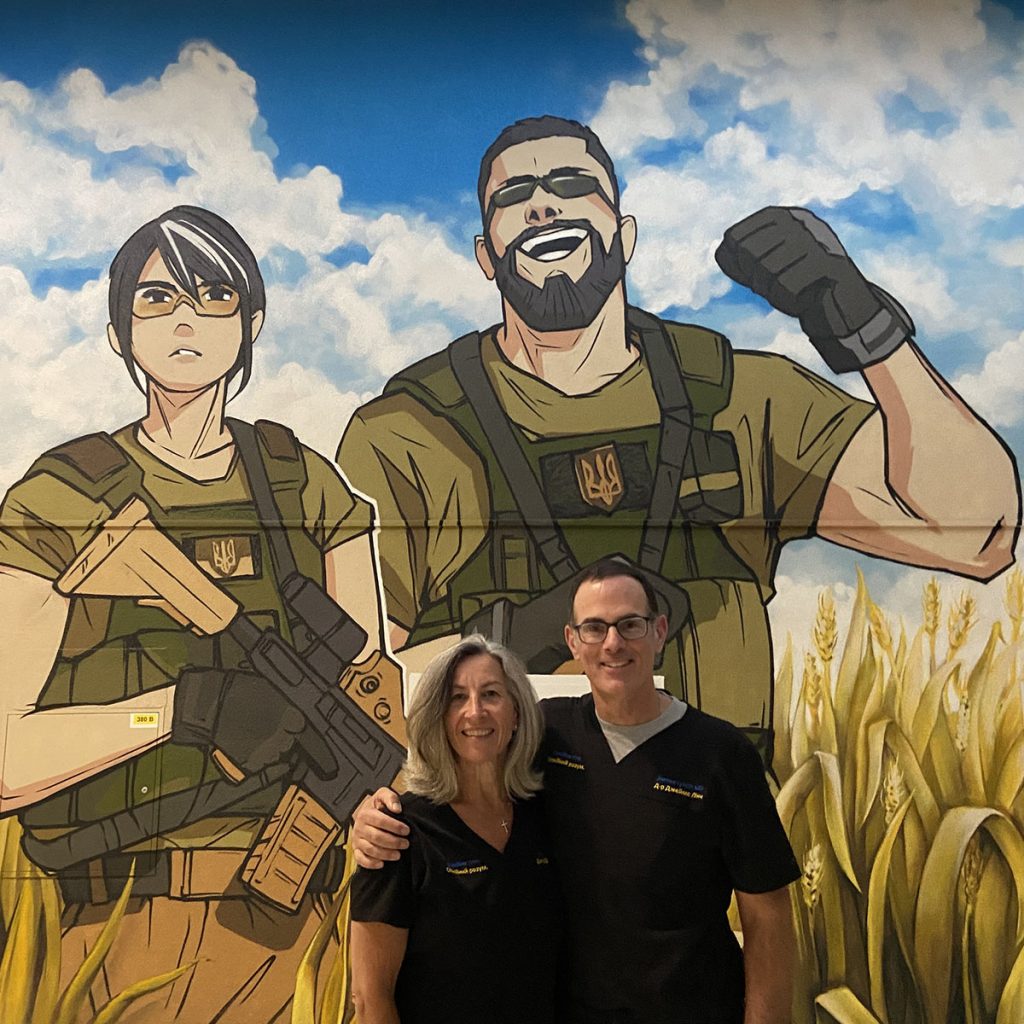
To create a welcoming, safe, comfortable treatment space unlike a typical doctor’s office, I relied on my wife’s expertise. Jodi and I have been married over 32 years. Prior to staying home with our three children, Jodi managed several complex medical organizations, serving as office manager for a variety of medical and dental specialties. With a background in business and a keen sensitivity for proper customer service, Jodi makes the ideal partner in this endeavor. It’s a perfect match!
On the surface we probably seemed ill-prepared to start our own practice. Afterall, I spent my entire medical professional career in the US Army, where I never had to worry about billing or balance sheets! Money was never an issue; every one of my patients in the military could receive the best possible care I could provide for free. It was up to me to make that care awesome, or not. No bonuses for productivity. No incentive to see patients every 15 minutes or add on unnecessary expenses for patients. Sure, as a military physician, there is no financial stick to prod you with. But for those military physicians who are self-starters and truly aim for high quality care, we had the freedom to deliver optimal care without patients wondering if financial incentives were impacting their doctor’s recommendations. It feels quite different to me in civilian medicine, and I suspect I will never like talking about money or the costs of care. That’s not why I became a physician.
After leaving the military in 2021, I had three years of private practice experience that taught me some valuable lessons for which I’m quite grateful. Now, having seen the possibilities that exist for how care can be provided in a way that I’m proud of, I have started my own practice in Gambrills, Maryland. Our goal is to make high quality stellate ganglion block treatment more accessible and more affordable for as many people as possible who are suffering from anxiety and posttraumatic stress symptoms. Creating a space is only part of this, but this is the task we needed to focus on first.
Creating a Healing Space

We found a spacious, centrally-located clinic building. Suite 200 at 2401 Brandermill Boulevard in Gambrills is surrounded by the types of amenities that people appreciate when flying in from out of state to receive treatment over a few days. Waugh Chapel has a hotel, nice restaurants and shops, and is about a 15-20 minute ride from BWI Airport. After much more time than I cared to endure in the legal leasing process, we finally had keys in hand! We decided not to skimp on anything and have decorated and built our clinic as if it were our home. In our 33 years of marriage, Jodi and I have moved 16 times, thanks to life in the US Army. We are adept at making a house a home and applied this same love to the clinic area. We know that this attention to detail matters and is not just window dressing. Rather, a warm, welcoming environment sets the tone for my care.

Picturesque natural landscapes decorate the walls. Soothing music calms the air. The waiting room is spacious, and a cozy leather couch welcomes you rather than the typical waiting room arranged chairs reminiscent of a bus station. We bought brand new medical equipment as well, from a top-of-the-line ultrasound machine to adjustable exam tables and premium supplies.
The small things matter. And now that this healing space is all ours, we can sink our heart into it and make the experience awesome—just like we would want for ourselves or our family members.
The Patient Experience
In many other clinical settings, procedures such as stellate ganglion block are performed in a surgery suite or operating room where, as the patient, you may be placed in a hospital gown and wheeled in on a gurney. The SGB may be performed under a large fluoroscopy C-arm. Some facilities offer or encourage sedation prior to this procedure, which is not necessary and incurs additional risk as well as superfluous costs. Your post-procedure recovery may be alongside other patients in hospital gowns on gurneys in a large bay. Your treating physician may speak with you for a few minutes before your procedure, answer your questions, and obtain your written consent as with all medical procedures. He or she will likely check on you in the recovery room to say goodbye before you are released. The total time you spend awake with your doctor may only be a few minutes total. Don’t get me wrong, there is nothing substandard about this care in our country today; it is quite typical.
However, while this impersonal care may be standard at many healthcare facilities, in my opinion, treating patients with severe anxiety and PTSD like this should be avoided, and we should not accept this as okay just because “that’s the way we always do it here.”
We can do better. At my clinic in Gambrills, Maryland, we do—much better. And it actually matters.

Practically every one of my patients is at least a little nervous or apprehensive before an SGB. That is totally normal. So, in order to reduce any unease at my clinic, we simply don’t rush. I take time—typically 45 minutes or so—with all of my patients to ensure your questions are answered. I explain exactly what I will do during the procedure and why. I share lessons I have learned from hundreds of my patients over my years of performing SGB. I do not subject my patients to unnecessary stressors such as wheeling you around on a gurney. You may wear whatever clothes make you comfortable (except for turtle necks, please!) There is no need for sedation, scary surgical lights, antibiotic injections, or hospital gowns. Your family can accompany you in the procedure room if you wish. Your service dog is welcome and may lay beside you or on the exam table with you if you desire. Whatever I can do to make you comfortable, I will. It takes me less than 10 minutes to safely perform an ultrasound-guided SGB at 2 levels. During the procedure, I talk with you to ensure there is no pain. You lay comfortably on your back and do not have to hold rigidly still! You can breathe normally. You can swallow normally. You can even talk. You are in control the whole time. If at any time you need to stop or take a break, we can, but this rarely happens because people do not find my SGB procedure painful, and the whole thing is done before you know it.
What Does Success Look Like?

To many business owners I suppose “success” is defined in a number of ways. While I may not have a business degree or be well-versed in profit margins and revenue streams, I know what success looks like for us. People deserve quality care, time, and a physician who listens. I know that people will travel for expert quality care—some from very far away. I know that taking care of one person at a time is a worthwhile endeavor and if I can relieve suffering every day for the patients sitting across from me, then that is a successful day. Period.
~~~
Happiness is not a destination; it’s a method of travel.